
November 2, 2026
/
There’s a good chance you’ve walked past the fire extinguisher by your break room door so many times that you barely notice it anymore. On most days, it doesn’t get a second thought until something nearby starts to smoke.
When that moment comes, the type of extinguisher on the wall and the way you use it will decide whether a small fire goes out or keeps spreading. That’s exactly why we’ve put together this portable fire extinguisher guide, so you’ll know what you’re reaching for long before you ever need to.
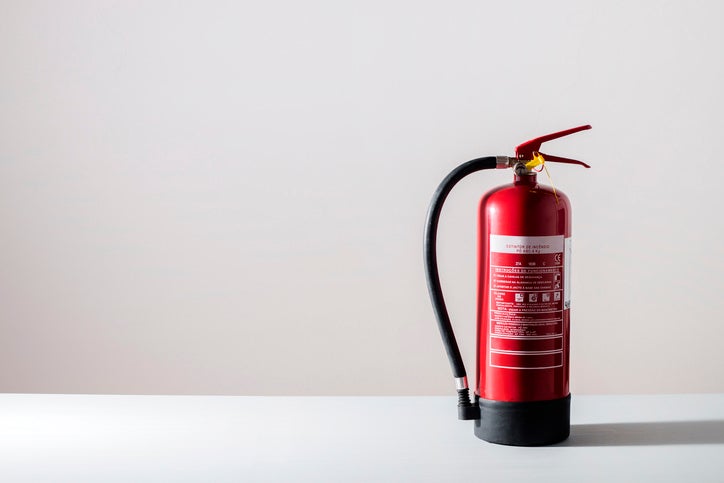
What Is a Portable Fire Extinguisher?
A portable fire extinguisher is a handheld cylinder of pressurized extinguishing agent, built so one person can carry it to a small fire and put it out. Its biggest advantage is timing. Someone standing nearby can act in the first few seconds, while the fire is still small enough to stop, and well before it spreads to the rest of the room or sets off your sprinkler system.
How Portable Fire Extinguishers Work
Every fire needs heat, fuel, and oxygen, along with a chemical reaction that keeps it burning. An extinguisher puts the fire out by taking away one of those pieces. Water cools burning material below the temperature it needs to keep igniting. Foam and carbon dioxide smother the fire by cutting off its oxygen, and dry chemical agents interrupt the chain reaction itself. But there are many types of fire extinguishers, which is why the agent inside yours has to match the type of fire in front of you.
Types of Fire Extinguishers and the Fires They Fight
Fires are grouped into classes by what’s burning, and each extinguisher is rated for the classes its agent can safely put out. Here are the types you’ll see most often:
- Multipurpose Dry Chemical – Rated for Class A, B, and C fires, these ABC units are the most common choice for offices, warehouses, and homes.
- BC Dry Chemical – These units handle flammable liquids and electrical fires, making them a strong fit for garages, workshops, and fuel storage areas.
- CO2 – This fire extinguisher uses carbon dioxide to smother Class B and C fires without leaving residue behind, so you’ll often find it around electrical panels and equipment.
- Water and Water Mist – Water units cool Class A fires, and water mist breaks the spray into fine droplets that are safer around electrical equipment.
- Wet Chemical – Built for Class K fires, these units cool burning cooking oil and form a soapy layer that keeps it from reigniting.
- Clean Agent – Halotron and similar agents put out Class A, B, and C fires and evaporate completely, protecting sensitive electronics and records.
How to Choose a Portable Fire Extinguisher
Walk through your building one area at a time, and choose each extinguisher based on what could burn there. Multipurpose ABC units cover most offices, hallways, and retail floors. In server rooms and electrical closets, a clean agent or CO2 unit will put out a fire without coating your equipment in powder. Commercial kitchens need a Class K unit within 30 feet of the cooking equipment. And where large amounts of fuel or flammable liquids are stored, a wheeled unit gives you far more agent than a handheld one. Then pick a size the people working nearby can lift and aim comfortably, which for most adults is a 5- or 10-pound unit.
Portable Fire Extinguisher Inspection and Maintenance
Fire extinguisher maintenance is mostly a quick monthly habit. Check that the gauge needle sits in the green, that the pin and tamper seal are still in place, and that the nozzle is clear. You’ll also want to look for any dents, corrosion, or anything blocking access to the unit.
Once a year, a certified technician needs to complete a more thorough inspection. Our technicians perform the 10-point annual inspection Arizona requires, and if a unit needs a recharge, six-year maintenance, or hydrostatic testing, we can also take care of that.
Common Mistakes When Using Fire Extinguishers
Most extinguisher mistakes come from the pressure of the moment, but being aware of them ahead of time is going to make them a lot easier to avoid. Here are a few of the most common:
- Aiming at the Flames – The fuel burns at the base of the fire, so spraying the tops of the flames sends your agent right past it.
- Forgetting the Pin – The handle won’t squeeze until the pin is pulled, and those few confused seconds give the fire time to grow.
- Squeezing Too Hard and Too Fast – A panicked squeeze is going to empty the cylinder quickly, so use steady pressure and sweep slowly across the base.
- Standing Too Close – Starting six to eight feet back will keep you out of the heat and let the spray cover the fire’s full width.
- Losing Track of Your Exit – Keep a clear way out behind you so you can leave right away if the fire keeps growing.
Fire Extinguisher Safety Tips
Where your extinguishers are placed is going to go a long way toward making them useful in an emergency. The ideal strategy is to mount each one along a path people already use to leave the building, so they’re heading toward an exit when they reach it. Keep the area in front of every unit clear of carts, boxes, and furniture, and mount it at a height that isn’t a struggle for adults to reach. For kitchen spaces, be sure to place the extinguisher a short distance from the stove, so no one would be forced to reach through the flames to grab it.
Keep Every Extinguisher Ready With Our Team
An extinguisher can only do its job when it’s matched to the hazard nearby and fully charged the moment someone reaches for it. And our fire protection services will ensure you’re prepared. At Service 1st Fire Protection, we sell and install every common type of fire extinguisher you may need. Our technicians can walk your property to match each unit to the hazards around it, then keep every one inspected, recharged, and ready. We also offer fire safety training, so your team knows how to use them with confidence. Contact our team today to schedule your extinguisher service.
Portable Fire Extinguishers: Frequently Asked Questions
How Many Fire Extinguishers Does My Business Need?
The number of extinguishers your business needs comes down to your floor space and the hazards inside it. NFPA 10 limits how far anyone should have to walk to reach one, with a maximum of 75 feet for ordinary hazards, and areas with more flammable materials need extinguishers closer together. We can walk through your building and map out exactly where each unit should go.
Can I Keep a Fire Extinguisher in My Car in Phoenix?
You can, but our summer heat can make it a little tricky. Most extinguishers are rated for storage up to 120°F, and a parked car here in Phoenix can get much hotter than that on a summer afternoon. An extinguisher stored above its rated temperature will usually still work, but it may discharge for a shorter time. Keeping it out of direct sun, like under a seat or in the trunk, will help protect it.
How Long Does a Fire Extinguisher Last?
A rechargeable extinguisher can last for decades with proper maintenance, recharging, and hydrostatic testing at its required intervals. Disposable extinguishers have a much shorter life and need to be replaced 12 years after their manufacture date. Either type needs to be replaced sooner if it’s damaged, corroded, or fails its annual inspection.
Do My Employees Need Fire Extinguisher Training?
If your workplace expects employees to use extinguishers, OSHA requires training when they’re hired and at least once a year after that. Even when it isn’t required, hands-on practice will help your staff stay calm and make better decisions in a real emergency. Our fire safety training can provide your team with that practice and experience with the same types of extinguishers mounted in your building.
Is Fire Extinguisher Powder Harmful?
Dry chemical powder isn’t considered toxic in small amounts, but it can irritate your eyes, skin, and lungs. It can also corrode metal and electronics if it sits too long, especially once moisture reaches it. After a discharge, open some windows, put on gloves and a dust mask, and clean up the powder as soon as the area is safe.