
November 9, 2026
/
Most of the fire protection equipment in your building goes unused for years at a time. The sprinkler heads overhead and the extinguishers near your exits look ready on any ordinary workday, but just looking at them won’t tell you whether they’ll work during an actual fire.
A fire inspection answers that ahead of time, so any problem can be repaired before anyone has to rely on that equipment. Below, we’ll walk through how inspections keep your building ready for an emergency, along with a fire inspection checklist of the systems your inspector will examine.
What Is a Fire Inspection?
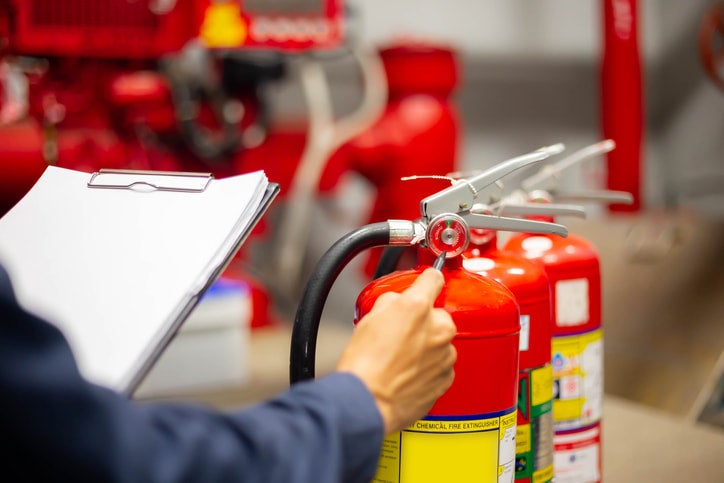
A fire inspection is a hands-on review of your building’s fire protection systems and exit routes, performed by a qualified technician and measured against the fire code and NFPA standards. Afterward, you’ll receive a written report listing any deficiencies that need to be repaired.
How Fire Inspections Support Emergency Readiness
A lot of the problems that undermine fire safety emergency preparedness can look perfectly normal from the hallway. But, whether a sprinkler control valve may have been left closed after a repair or a pallet of inventory may be sitting in front of an exit door, a fire inspection specialist will find those problems while there’s still time to fix them. That way, your equipment will respond the way it’s designed to, and your people can get out safely.
What Does a Fire Inspection Include?
Your inspector will work through your building one system at a time, and here’s what they’ll be checking along the way:
Exits, Exit Signs, and Emergency Lighting
Each exit route should be clear from end to end, with exit signs that remain lit and emergency lights that switch on when normal power is cut.
Fire Alarm and Detection Devices
Smoke detectors and pull stations are activated to confirm that each one signals the control panel, which should show no trouble signals.
Sprinkler Systems and Control Valves
Sprinkler heads need to have ample space cleared around them, and every control valve should be fully open so water can actually reach those heads.
Portable Fire Extinguishers
Each extinguisher should be mounted in its designated spot, fully charged, easy to reach, and carrying a current service tag.
Fire Doors and Combustible Storage
Fire doors need to close and latch on their own, and combustible materials should be stored at least three feet from any heat source.
The Benefits of Regular Fire Inspections
Scheduling fire inspections regularly is going to pay off long before an emergency ever occurs. Here’s what they give your business throughout the year:
- Repairs on Your Schedule – Deficiencies found early can be repaired when it suits your operations, not as an urgent call after any equipment fails.
- Longer Equipment Life – Catching corrosion and worn parts early keeps your systems in service longer and helps you avoid premature replacements.
- Fewer False Alarms – Dirty or aging detectors can sound your alarm when there’s no fire, and inspections catch those detectors before they interrupt your workday.
- Records Your Insurer Expects – Inspection reports document that your systems were tested and maintained, giving your insurance carrier the proof it may request after a claim.
Fire Inspections and Regulatory Compliance
Here in Phoenix, the 2024 International Fire Code with local amendments sets the fire inspection requirements your building has to meet. After your inspection company submits its report, a Phoenix Fire Department inspector reviews it and follows up with your property’s responsible party on any correction deadlines. Repairs to a deficient system may also require a Fire Inspection, Testing, and Maintenance permit.
How Businesses Can Prepare Between Inspections
Your people play just as big a role in an emergency as your equipment. A practical fire emergency preparedness checklist includes a written evacuation plan with a designated assembly point, plus drills so your staff can follow that route without hesitating. From there, just make sure that you keep all exits, valves, and alarm panels clear, and take a look at the panel regularly for any trouble lights.
Signs It’s Time to Schedule a Fire Inspection
A few changes are good reasons to schedule an inspection before your next routine visit. The Phoenix Fire Department urges businesses to check their life safety systems after monsoon storms. A renovation or a new use for the space may also alter what your systems need to protect. And if your panel shows a trouble signal or your service tags have expired, it’s time to give our team here at Service 1st Fire Protection a call.
Schedule Your Phoenix Fire Inspection With Our Team
Phoenix now relies on independent companies for fire and life safety inspections, so the team you partner with will determine how thorough yours actually is. Here at Service 1st Fire Protection, our CSA-certified technicians have served Arizona properties since 2006, and we’re proud members of the NFPA and NAFED. Our inspections give you clear, actionable recommendations, and our repair team can restore any system that needs work.
Contact us today to schedule your fire inspection. And if a system problem can’t wait, our technicians are available 24/7.
Fire Inspections: Frequently Asked Questions
How Often Should a Business Have a Fire Inspection?
Most fire protection systems need a full inspection at least once a year, and some components, like alarm devices and extinguishers, get checked more often in between. The fire code sets the exact schedule for each system, and the Phoenix Fire Department publishes an inspection frequency guide for local properties. We can help you put every system on one schedule so none of them slip past their due dates.
How Long Does a Fire Inspection Take?
How long your inspection takes will come down to your building’s size and the number of systems inside it. A single extinguisher takes our technicians about 10 minutes, but a building with sprinklers, alarms, and dozens of devices needs considerably longer. We can give you a time estimate when you schedule.
How Can I Prepare for My Fire Inspection?
The easiest way to prepare is to make sure your inspector can reach every system without waiting on keys or moving storage. Clear the way to your riser room, alarm panel, and any pump or electrical rooms, and have someone available to unlock rooftop or tenant spaces. It also helps to keep your last inspection report on hand, so you can confirm that earlier deficiencies were corrected.
Will a Fire Inspection Disrupt My Business?
A fire inspection usually causes very little disruption, but alarm testing will sound the horns and flash the strobes for short periods. Before testing begins, the monitoring center is notified so the fire department isn’t dispatched by mistake. Letting your staff and tenants know when the visit is scheduled will save everyone some surprise that day, and we can work with you on timing that keeps interruptions to a minimum.
What Happens if My Building Fails a Fire Inspection?
Your inspection report will list each problem by severity. A deficiency means a system may not perform as intended and should be corrected promptly. An impairment means part of a system won’t work at all and needs immediate attention.